Foot circulation machines in the UK: types, benefits and how to choose
Cold feet, heavy legs and puffy ankles lead lots of people to search for a "foot circulation machine". There are several very different types on sale in the UK. This guide explains how each works, so you can choose the right one for you.
Written and reviewed by the Struqt UK team · Updated 8 October 2026
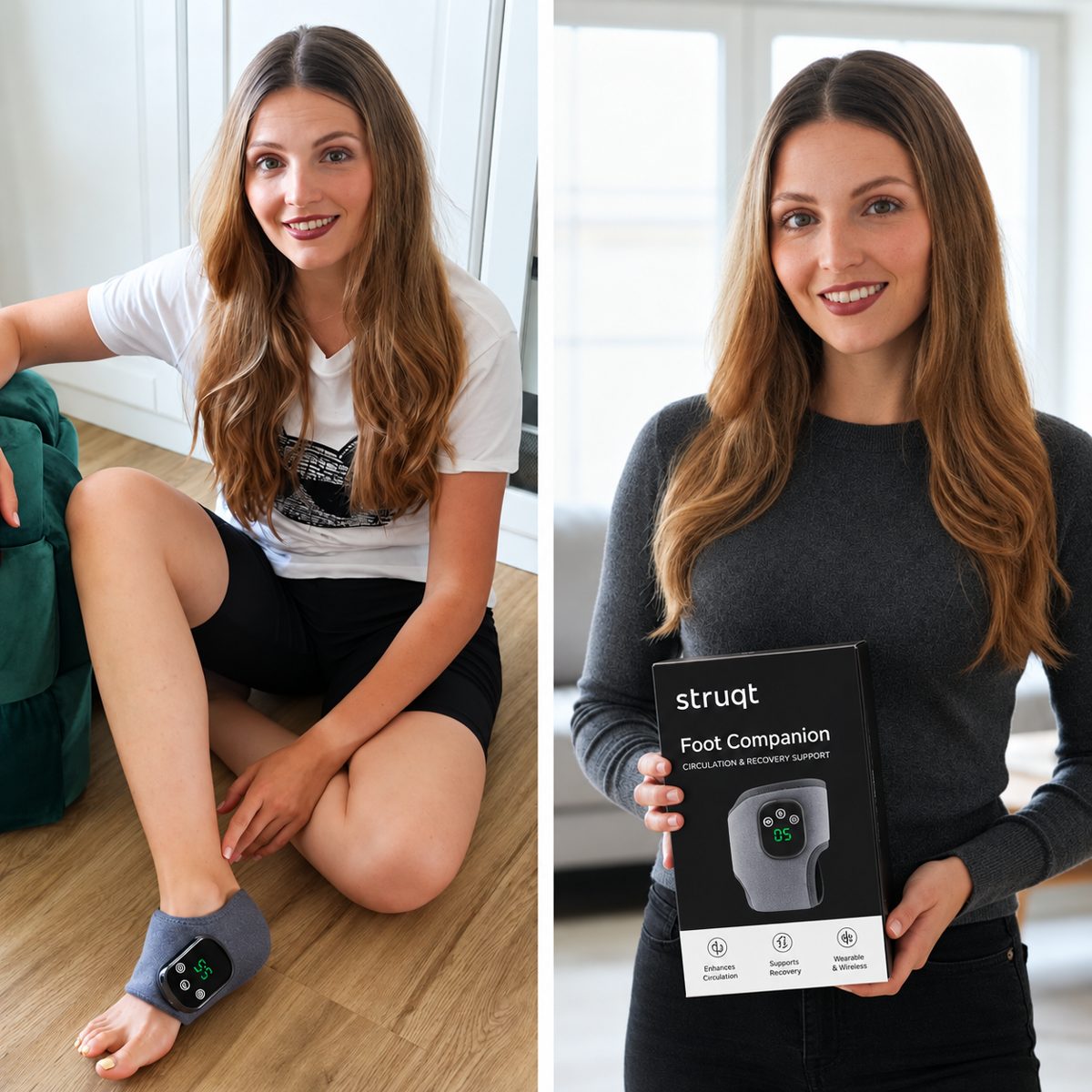
Struqt Foot Companion at a glance
- Heat, vibration massage and compression in one cordless wrap
- Free UK delivery
- 90-day money-back guarantee
- Free swelling guide with 2+ packs
- Secure Shopify checkout
Quick answer
"Foot circulation machine" covers three main types: EMS footplates (electrical pulses make calf muscles contract), air compression boots (inflate and deflate around the legs), and wearable heat-and-compression wraps like the Struqt Foot Companion. All aim to get blood and fluid moving. A wrap is a gentler, lower-cost option focused on the foot and ankle. If you have a diagnosed circulation condition, ask your GP which – if any – is right for you.
Why circulation in the feet matters
Your feet are the furthest point from your heart, so blood has to work against gravity to get back up the legs. The calf muscles act as a "second heart": every step squeezes the veins and pushes blood upwards. When we sit or stand still for long periods, that pump slows down, and many people notice:
- cold feet and toes
- heavy, tired legs at the end of the day
- puffy ankles
- stiffness and aching
These everyday symptoms are usually helped by moving more, raising your legs and keeping warm. But if you have leg pain when walking that eases with rest, wounds that won't heal, or colour changes in your feet, see your GP – these can be signs of peripheral arterial disease (PAD), which needs medical care.
The three main types of foot circulation machine
| EMS footplate | Air compression boots | Heat + compression wrap (Struqt) | |
|---|---|---|---|
| How it works | Electrical pulses through the soles make leg muscles contract | Long sleeves inflate in sequence from foot to thigh | Air chambers squeeze the foot and ankle, plus warmth and vibration |
| Feels like | Tingling, muscle twitching | Firm squeezing up the legs | Warm, gentle squeeze and massage |
| Coverage | Soles, calves via muscle contraction | Feet to thighs | Foot and ankle |
| Use while | Sitting with feet on the plate | Lying or reclining | Sitting anywhere – cordless |
| Typical UK price | ~£100–£300+ | ~£80–£300+ | £39.99–£49.99 each |
| Not suitable for | Pacemakers, some other conditions | Some circulation and heart conditions | Some circulation and heart conditions – check with GP |
Prices are a general guide and vary by brand and model. For a closer look at the best-known EMS brand, see Struqt vs Revitive.
How the Struqt Foot Companion supports circulation
The Struqt Foot Companion takes a gentler, foot-and-ankle approach:
- Rhythmic air compression squeezes and releases around the foot and ankle – a similar idea to the calf-muscle pump and compression socks.
- Warmth helps cold feet feel comfortable and muscles relax.
- Vibration massage eases tired muscles.
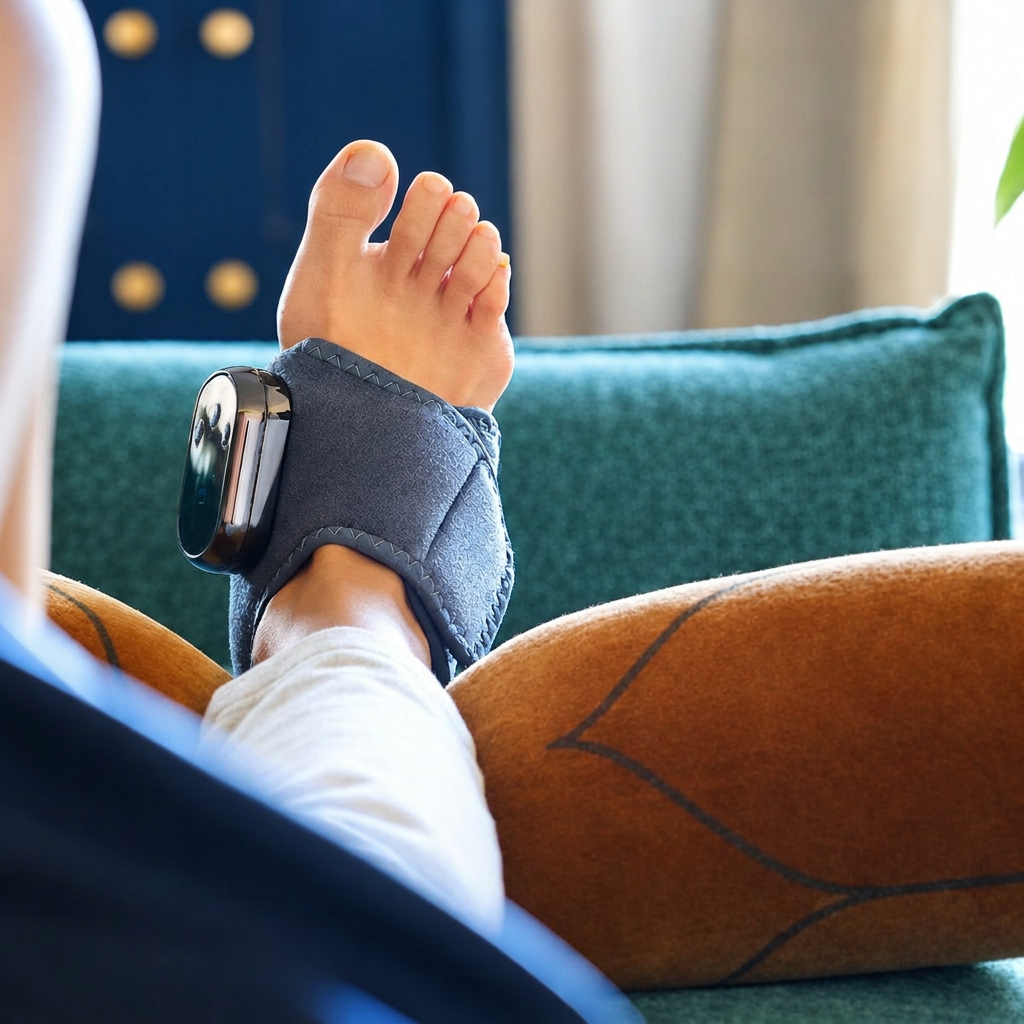
It's cordless and quiet, so you can wear it on the sofa, at your desk or in bed while reading. It's designed to support circulation and comfort as part of a healthy routine – it isn't a medical device and doesn't treat circulation disease.
Who a foot circulation machine can suit
- People who sit for long hours – office workers, drivers, people with limited mobility.
- People who stand all day and get heavy legs and puffy ankles – see foot massager for swollen feet.
- Older adults who move less and feel the cold – see foot massager for elderly parents.
- Anyone with cold feet in winter.
Who should check with a GP first
Any device that applies compression, heat or electrical stimulation isn't right for everyone. Speak to your GP before using one if you have:
- a current or past blood clot (DVT)
- peripheral arterial disease or a diagnosed circulation condition
- heart failure or a heart condition
- diabetes with reduced feeling – see our diabetics guide
- a pacemaker or implanted device
- open wounds, ulcers or skin infections on the legs or feet
- pregnancy
Never use one on a leg that is suddenly swollen, painful, warm or red – this needs urgent medical attention.
Everyday habits that boost circulation
- Walk regularly – even 10 minutes several times a day helps.
- Do ankle pumps and circles when sitting: point and flex your feet 10 times every hour.
- Raise your legs when resting.
- Don't sit with your legs crossed for long periods.
- Stop smoking – it's one of the biggest causes of poor circulation.
- Stay hydrated and keep to a healthy weight.
- Keep your feet warm with good socks and slippers.
A circulation machine works best as a pleasant addition to these habits, not a replacement.
How to choose
Ask yourself: Do I want the sensation of electrical stimulation, or warmth and squeezing? Do I want to use it anywhere, or am I happy sitting in one spot? Is my budget around £50 or £200+? Do I want ankle coverage? If you prefer warmth and a gentle squeeze around the foot and ankle at a lower price, the Struqt Foot Companion is a good fit – and it comes with free UK delivery and a 90-day money-back guarantee. See prices and bundles.
Frequently asked questions
Do foot circulation machines really work?
They can help everyday symptoms like heavy legs, cold feet and puffy ankles feel better, by encouraging movement of blood and fluid. They don't cure circulation disease, so see your GP if you have symptoms of a circulation problem.
What's the difference between EMS and compression?
EMS uses electrical pulses to make muscles contract. Compression uses air chambers that squeeze and release. The Struqt Foot Companion uses compression, heat and vibration – not EMS.
How long should I use a circulation machine each day?
Around 15–30 minutes a day is typical. The Struqt Foot Companion runs in timed sessions and switches off automatically.
Can I use a foot circulation machine with a pacemaker?
EMS devices are generally not suitable with a pacemaker. Check with your cardiologist or GP before using any device, including the Struqt Foot Companion.
Are foot circulation machines available on the NHS?
Consumer circulation machines generally aren't prescribed on the NHS. Your GP can advise on medical treatments such as compression stockings if you need them.
Is the Struqt Foot Companion a medical device?
No. It's a comfort and wellness device designed to soothe tired feet and support circulation as part of a healthy routine.
How much is the Struqt Foot Companion?
£49.99 for one, £44.99 each for two or £39.99 each for three, with free UK delivery.
Sources and further reading
Read next
The Struqt Foot Companion is a comfort and wellness device. It is not intended to diagnose, treat or cure any medical condition. If you have a health condition, are pregnant or have a pacemaker, speak to your GP before use.