Foot massagers and diabetes: what to know before you buy
Around 4.4 million people in the UK live with diabetes, and many look for ways to soothe tired, achy feet. Diabetic feet need extra care, so here's exactly what to consider – honestly and safely.
Written and reviewed by the Struqt UK team · Updated 8 October 2026
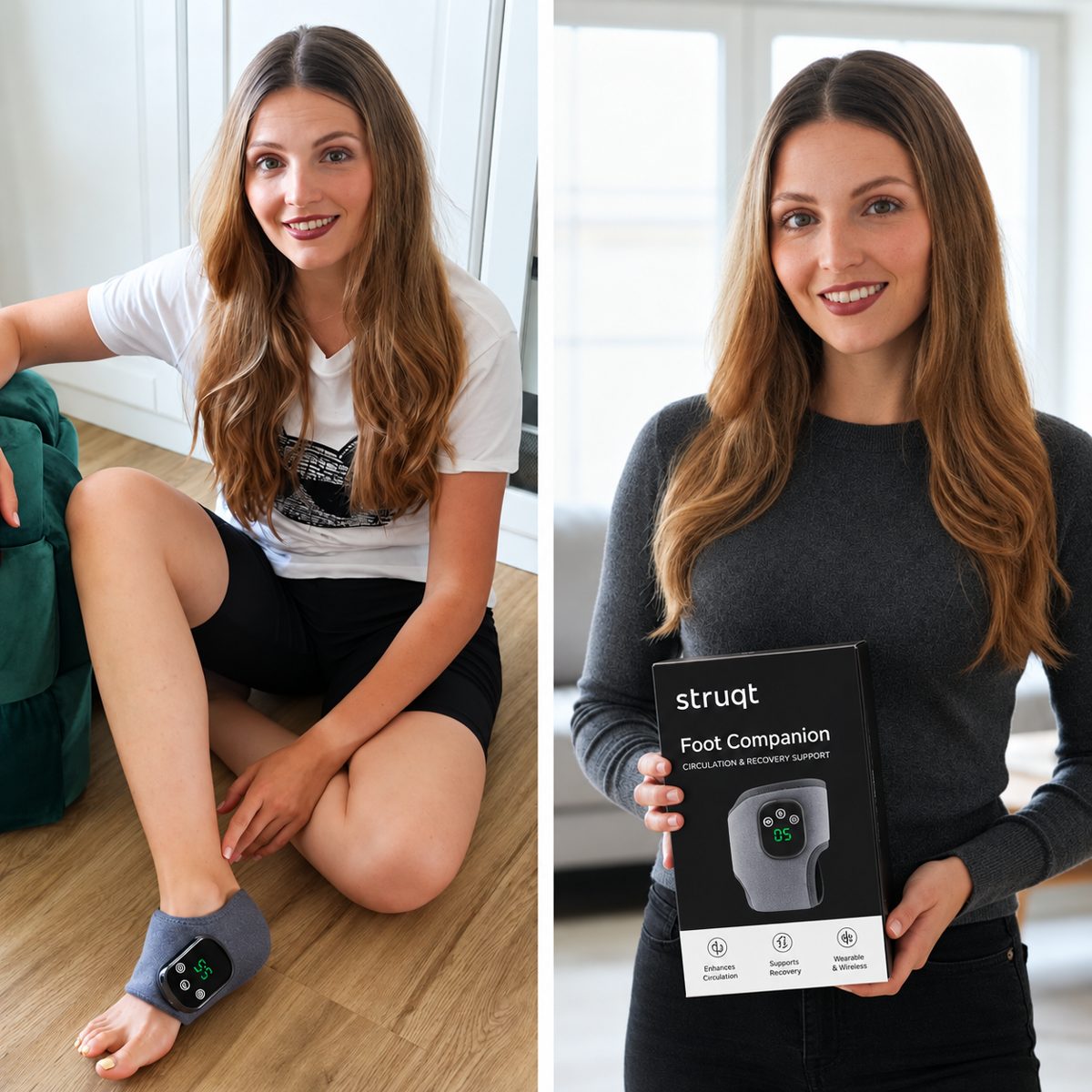
Struqt Foot Companion at a glance
- Heat, vibration massage and compression in one cordless wrap
- Free UK delivery
- 90-day money-back guarantee
- Free swelling guide with 2+ packs
- Secure Shopify checkout
Quick answer
Many people with diabetes can use a gentle foot massager, but check with your GP, diabetes nurse or podiatrist first – especially if you have reduced feeling (neuropathy), poor circulation, or any wounds or ulcers. If you get the go-ahead, use the lowest heat and pressure, keep sessions to 10–15 minutes and check your feet before and after. A massager can help tired feet feel more comfortable; it doesn't treat diabetes or diabetic neuropathy.
Why diabetic feet need extra care
Over time, high blood sugar can damage the nerves and blood vessels in the feet. Diabetes UK explains that this can lead to:
- Reduced feeling (neuropathy) – you may not notice heat, pressure, cuts or blisters.
- Reduced blood flow – injuries can heal more slowly.
- Dry skin and changes in foot shape, which can cause pressure points.
Together, these raise the risk of foot ulcers. That's why the NHS offers people with diabetes an annual foot check, and why anything that applies heat or pressure to the feet needs a little more thought.
Speak to your GP or podiatrist first
Before using any heated or compression foot massager, ask your diabetes team. Useful things to tell them:
- the device uses gentle heat, vibration and air compression
- it has adjustable levels and an automatic timer
- it doesn't use electrical muscle stimulation (EMS)
Questions to ask: Is my foot risk rated low, moderate or high? Is my feeling normal? Is my circulation good enough for heat and compression? Are there any settings I should avoid?
If your foot risk is high, or you have active foot problems, your clinician may advise against it – and that's the right call to follow.
If you get the go-ahead: how to use it safely
- Check your feet first – look for cuts, blisters, redness, swelling or broken skin. Use a mirror for the soles. Don't use it if you find anything.
- Start on the lowest heat and compression.
- Keep sessions short – 10 to 15 minutes.
- Consider a thin cotton sock between skin and device if advised.
- Never use on wounds, ulcers or infections.
- Don't fall asleep wearing it.
- Check your feet again afterwards for redness that doesn't fade within a few minutes, blisters or colour changes.
Stop and contact your GP or foot protection team if you notice any change.
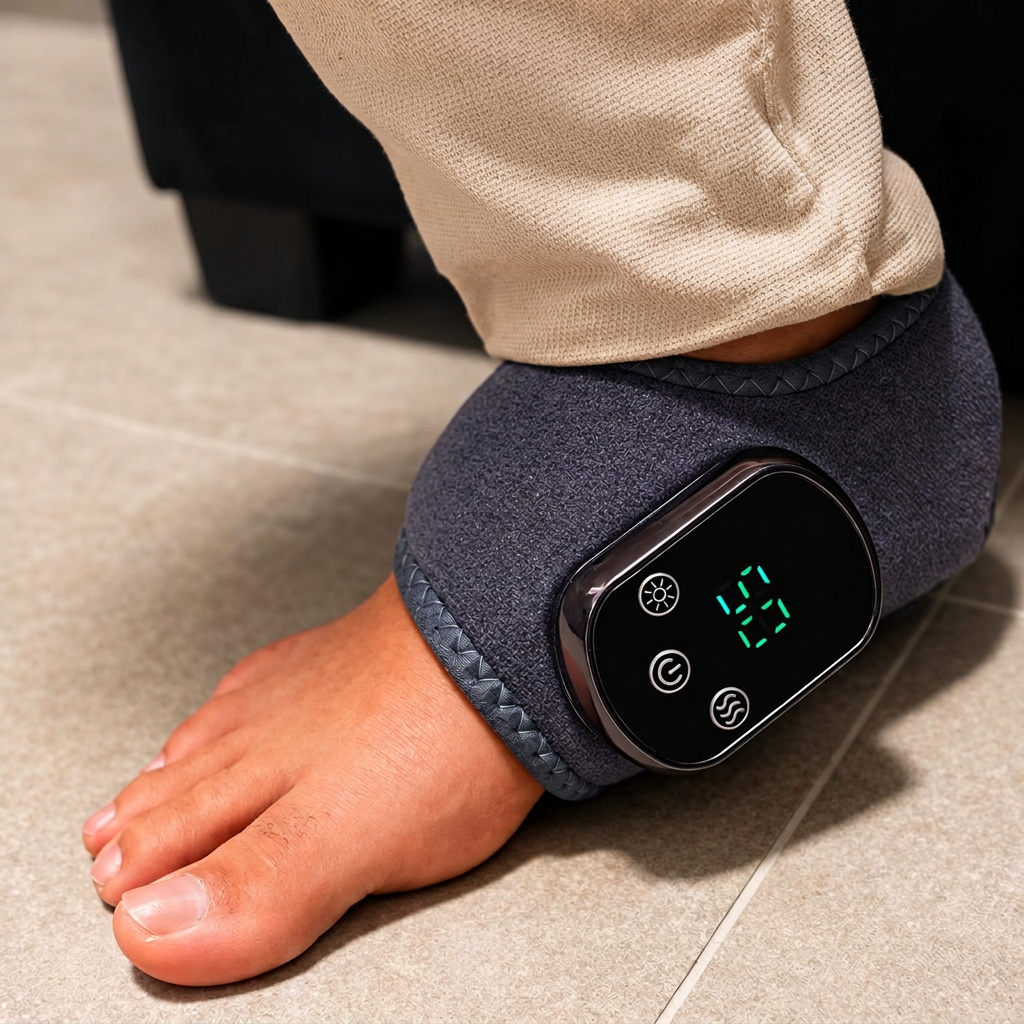
How the Struqt Foot Companion is designed
The Struqt Foot Companion is a soft, cordless wrap for the foot and ankle. It has adjustable heat, vibration and compression levels, so you can keep everything gentle, and it switches itself off at the end of each session. It's designed to help soothe tired feet and support circulation as part of a healthy routine.
It is not a medical device and is not a treatment for diabetes, diabetic neuropathy, ulcers or circulation disease. If you want to understand the difference between a comfort device and a medical circulation booster, read Struqt vs Revitive.
Daily diabetic foot care checklist
Diabetes UK and the NHS recommend these daily habits – far more important than any gadget:
- Check your feet every day, including between the toes.
- Wash daily in warm water – test it with your elbow, not your foot – and dry carefully between the toes.
- Moisturise dry skin, but not between the toes.
- Cut toenails straight across, or have a podiatrist do it.
- Wear well-fitting shoes and seamless socks; never walk barefoot.
- Avoid hot water bottles, electric blankets on bare feet and sitting close to fires.
- Keep your blood sugar, blood pressure and cholesterol in your target range.
- Go to your annual foot check.
Signs you need urgent help
Contact your GP, foot protection service or NHS 111 the same day if you notice:
- a new cut, blister or wound that isn't healing
- a change in the colour or temperature of your foot
- swelling, especially in one foot
- pain, throbbing or a discharge or smell from a wound
- a foot that feels hot and looks red
Diabetes UK says these are signs of a foot emergency. Don't wait – early treatment makes a big difference.
Buying for someone with diabetes?
If you're buying a foot massager as a gift for a parent or partner with diabetes, encourage them to check with their diabetes team before first use – you could even mention it in the card. Our gift guide and guide for elderly parents have more tips. Every order includes our 90-day money-back guarantee, so if their clinician says it isn't suitable, you can return it.
Frequently asked questions
Can diabetics use a foot massager?
Many can, but check with your GP, diabetes nurse or podiatrist first, especially if you have reduced feeling, poor circulation, ulcers or wounds.
Is heat safe for diabetic feet?
Reduced feeling can make it hard to judge temperature, which raises the risk of burns. Use the lowest heat setting only with your clinician's agreement, and check your skin afterwards.
Will a foot massager cure diabetic neuropathy?
No. A massager may help tired feet feel more comfortable but does not treat or cure neuropathy.
Is compression safe if I have diabetes?
It depends on your circulation. People with peripheral arterial disease may be advised to avoid compression. Ask your GP or podiatrist.
Does the Struqt Foot Companion use electrical stimulation?
No. It uses heat, vibration and air compression, not EMS.
How long should a diabetic use a foot massager?
If your clinician agrees, start with 10–15 minutes on the lowest settings and check your feet before and after each session.
What if my podiatrist says it's not suitable?
You're covered by our 90-day money-back guarantee – contact us and we'll arrange a refund.
Sources and further reading
Read next
The Struqt Foot Companion is a comfort and wellness device. It is not intended to diagnose, treat or cure any medical condition. If you have a health condition, are pregnant or have a pacemaker, speak to your GP before use.